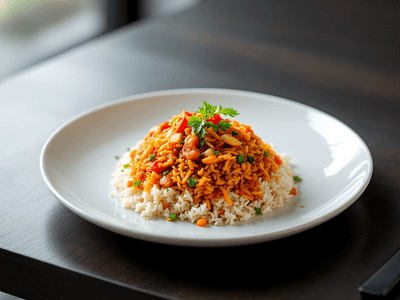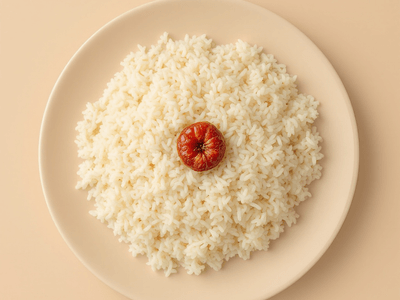
Nasi Uduk
Indonesian • Eggetarian
How to Make Nasi Uduk (Traditional & Healthy Version)
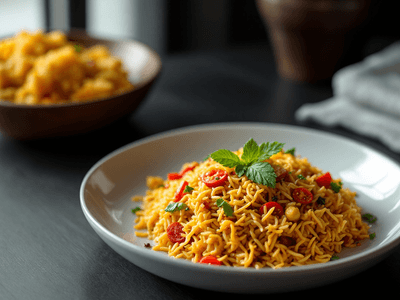
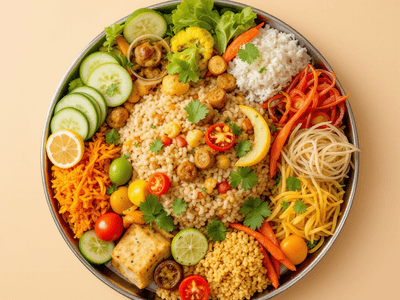
Nasi Uduk is a fragrant coconut rice dish deeply rooted in Malaysia’s multicultural culinary tapestry. Though this dish finds its origins in Indonesia, it has been warmly embraced in Malaysia, especially in urban areas where Malay, Chinese, and Indian influences mingle. The heart of Nasi Uduk lies in its aromatic rice, cooked with santan (coconut milk), daun pandan (pandan leaf), and serai (lemongrass), infusing every grain with a delicate, creamy fragrance. Traditionally served with assorted sides, the vegetarian version highlights local ingredients like tempeh, tofu, and fresh cucumber, making it a wholesome choice for lunch. Nasi Uduk stands out for its rich yet light flavor profile, thanks to the harmonious blend of spices such as halba (fenugreek) and daun salam (Indonesian bay leaf), which are also found in Malaysian kitchens. This dish is not only delicious but also versatile, allowing you to enjoy it with a variety of healthy, plant-based accompaniments. Perfect for calorie-conscious eaters, Nasi Uduk offers a satisfying meal without sacrificing traditional taste. Its popularity at community gatherings and festive occasions reflects Malaysia’s vibrant food culture, where sharing hearty, aromatic meals is a cherished ritual.
Ingredients(for 1 bowl of coconut rice with sides (approx. 250g))
- 1 cup White rice (beras putih)
- 1/2 cup Coconut milk (santan)
- 1 cup Water
- 2 leaves Pandan leaves (daun pandan, tied into a knot)
- 1 stalk Lemongrass (serai, bruised)
- 1 leaf Bay leaf (daun salam)
- 1/2 tsp Salt
- 100g Tempeh (sliced and pan-fried) - optional
- 100g Tofu (cubed and pan-fried) - optional
- 1/2 Cucumber (sliced) - optional
Instructions
- 1
Rinse the beras putih (white rice) under running water until the water is clear. Drain well.
5 minutes
Rinsing removes excess starch for fluffier rice.
- 2
In a pot, combine rice, santan (coconut milk), water, pandan leaves, serai (lemongrass), daun salam (bay leaf), and salt.
2 minutes
Tying pandan leaves into a knot makes them easier to remove later.
- 3
Bring to a boil over medium heat. Once boiling, reduce heat to low, cover, and simmer for 15 minutes.
15 minutes
Keep the lid on to trap steam and infuse aromas.
- 4
Once the rice is cooked and liquid absorbed, turn off the heat and let it rest, covered, for 5 minutes.
5 minutes
Resting allows the rice grains to firm up and become fluffy.
Why This Dish is Healthy
This healthy Malaysian Nasi Uduk recipe uses minimal oil, whole ingredients, and plant-based proteins. By opting for tempeh and tofu instead of fried accompaniments, you reduce saturated fat and increase fiber and protein intake. Coconut milk, used in moderation, adds flavor without excess calories. The use of fresh herbs and vegetables keeps the dish light, making it ideal for weight management and balanced nutrition.
Nasi Uduk, made with coconut milk and aromatic herbs, provides complex carbohydrates and healthy fats. Coconut milk offers medium-chain triglycerides (MCTs) that support energy and metabolism. The inclusion of tempeh and tofu adds plant-based protein, making this meal balanced and suitable for vegetarians. Pandan and lemongrass are rich in antioxidants, while cucumber offers hydration and vitamin C. This dish is low in cholesterol and free from artificial additives, supporting heart health and digestive wellness.
Pro Tips
- 💡Tip 1: Use freshly squeezed santan for richer coconut flavor.
- 💡Tip 2: Brown rice can be substituted for more fiber and lower GI.
- 💡Tip 3: Add a pinch of turmeric for a golden hue and extra antioxidants.
Storage & Serving
Store leftover Nasi Uduk in an airtight container in the refrigerator for up to 2 days. Reheat gently in a microwave or steam for best texture.
Best served: Breakfast or Lunch
Nutrition Facts
| Nutrient | Per 100g |
|---|---|
| Energy | 320.0 kcal |